About five years ago I found myself wandering down Mount Street in Mayfair. It was my first time on the street, and I was a simple man with one mission: a visit to the flagship RRL store (an excellent store that is now no lonnger). At the time, the Porsche showroom marked the beginning of the street, a sight indicative of the enclave of luxury retail it was home to. As I walked further down, I was greeted by a stone statue depicting a Nymph like figure in front of a water feature, just outside of the grand Connaught hotel. Across the street was a rather novel display: a long line of well moneyed Chinese and Saudi tourists queuing up outside of the Goyard flagship, eager to get their hands on monogrammed luggage and bags. But, between all these rather ostentatious displays of opulence, one sight I saw left an impression on me above all else. It was in the window of the Tobacconist Sautter’s. Their display that day had a rather curious object situated in amongst the premium cigars and smoking related ephemera. It was a Safari Jacket. Back then, I thought this to be a bit puzzling, as the safari jacket is something I had only really seen as a kind of novelty item. An association perhaps stemming from the character Nigel Thornberry of ‘The Wild Thornberries’, which was a cartoon I grew up with. I think it was probably this connection that had subconsciously set in my mind the idea that the safari jacket was merely a kind of fancy dress fodder. So seeing one here in such an elevated environment slightly threw me off. Yet, with the way the jacket was styled on the mannequin (popped collar and belt casually tied to the side), it most certainly left an impression. So, while I may have ended up not purchasing anything from RRL that day, what I had seen in Sautter’s had surely planted in me a sartorial seed…
And clearly that seed did grow, as the safari jacket has since become one of my most adored outerwear patterns. To me, it is one of those ‘ultimate’ jackets, in the sense that the possibilities of customisation are almost endless, and no two safari jackets are ever really quite the same. Here is a selection of some vintage ones I have sold in the Sartorium over the last year (By Polo, J Peterman, Pal Zileri and others):
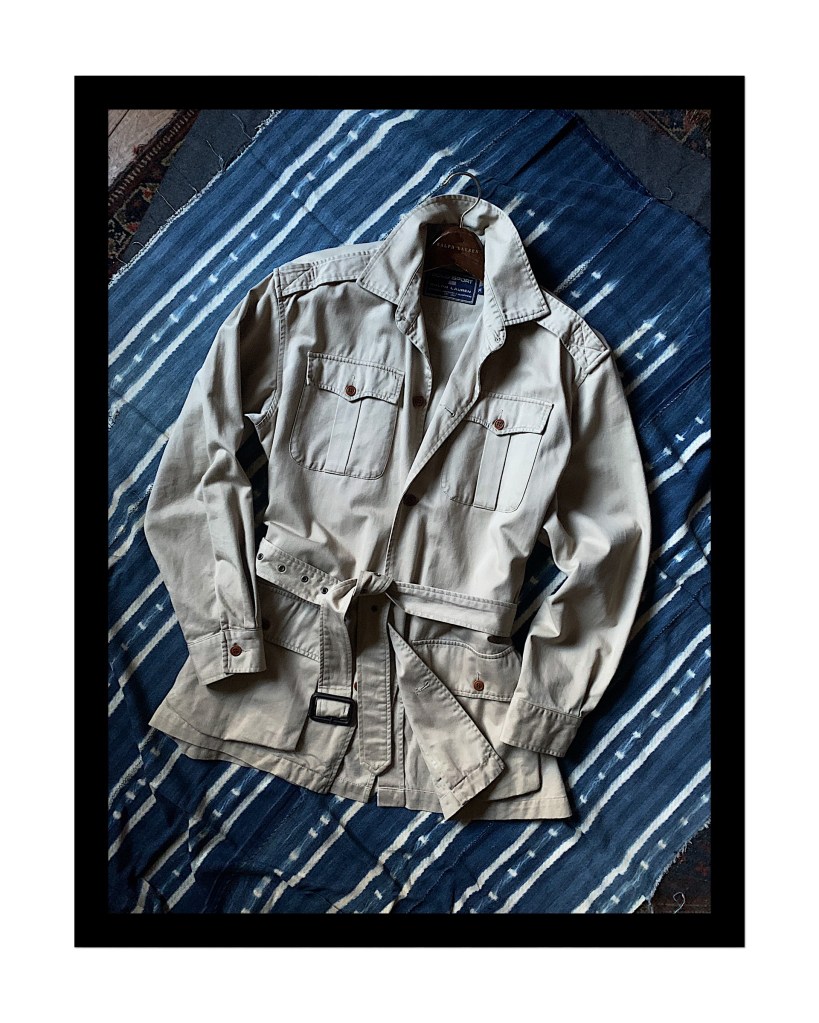
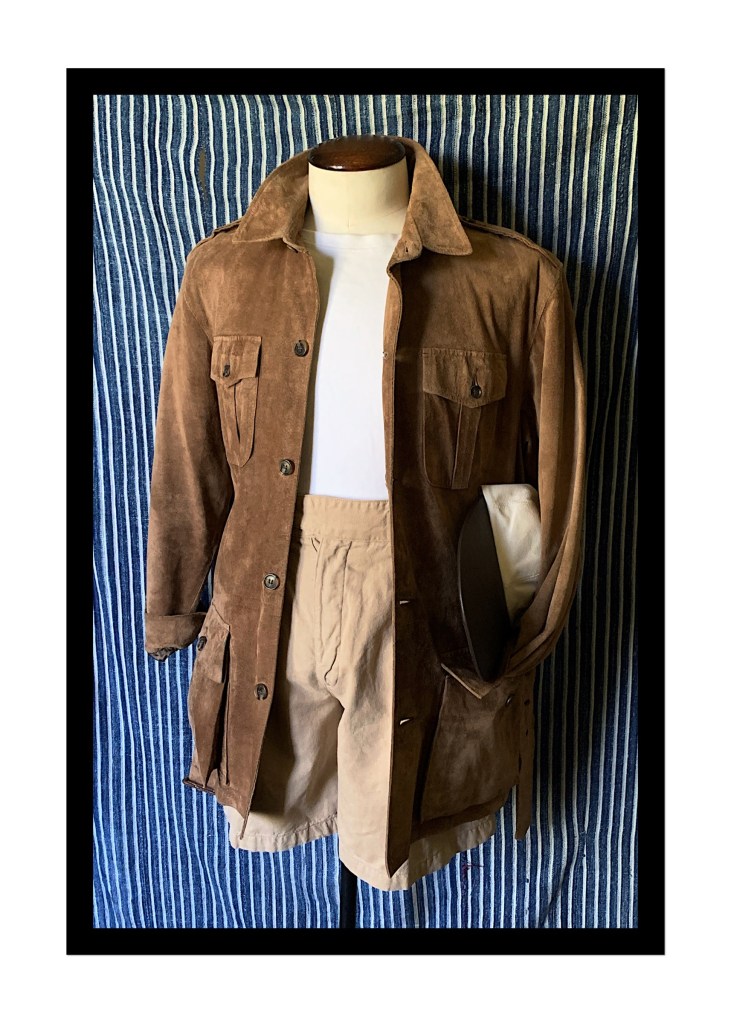
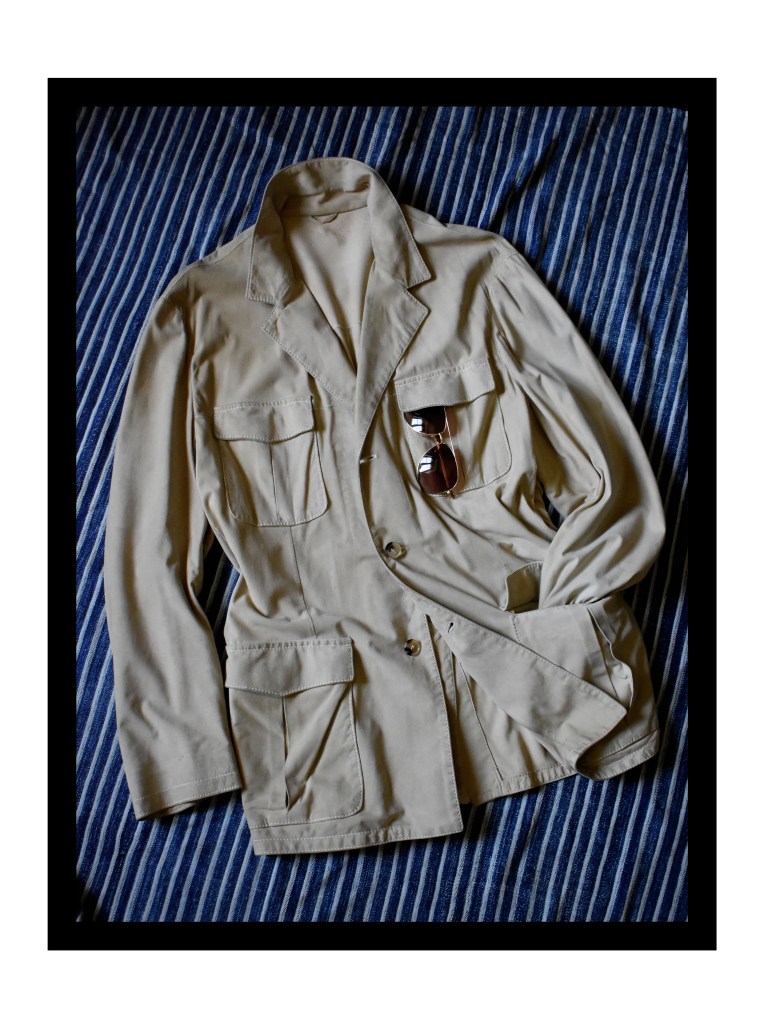
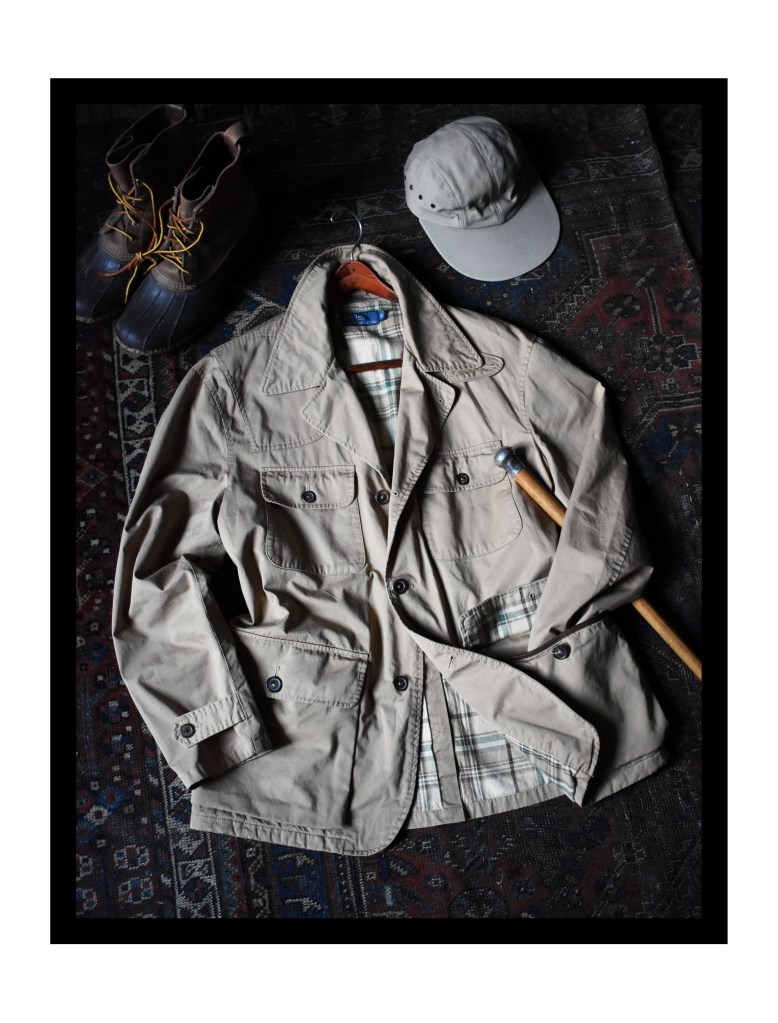
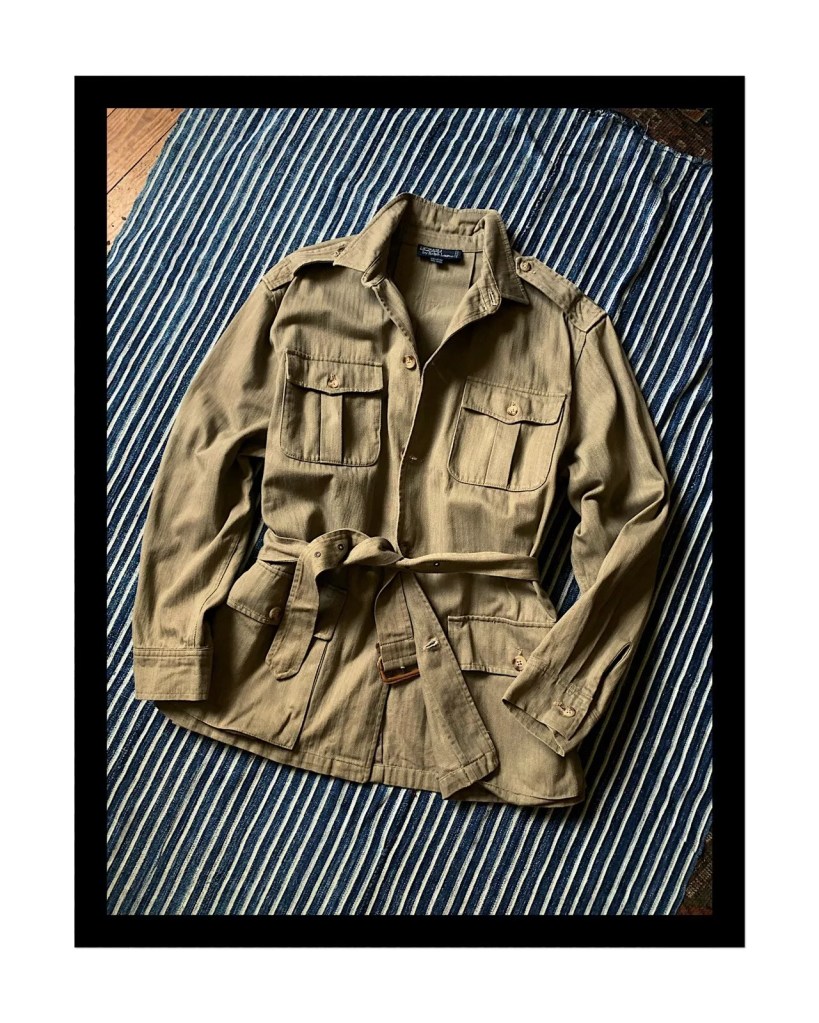
At its core it is a ‘field’ jacket, and as such is typified by the four pocket layout on the front. But after that, a good safari jacket can really go in so many different directions. They can have fully detachable belts or half belts, epaulettes or none, bellows pockets or pleated pockets (or both!). Pleated backs and bi swing vents are a common feature but are not always present. Some come with large point collars that can be popped ‘just right’, whilst others have banded collars. Typically they are made up in a Khaki coloured cotton twill fabric, but experimentation over the years has shown that they can really be made up in just about anything. From soft calfskin suedes, to heavy wide wale corduroys, or even Woolen twills and tweeds. And indeed, the history of the garment in a fashion context is a testament to such versatility.
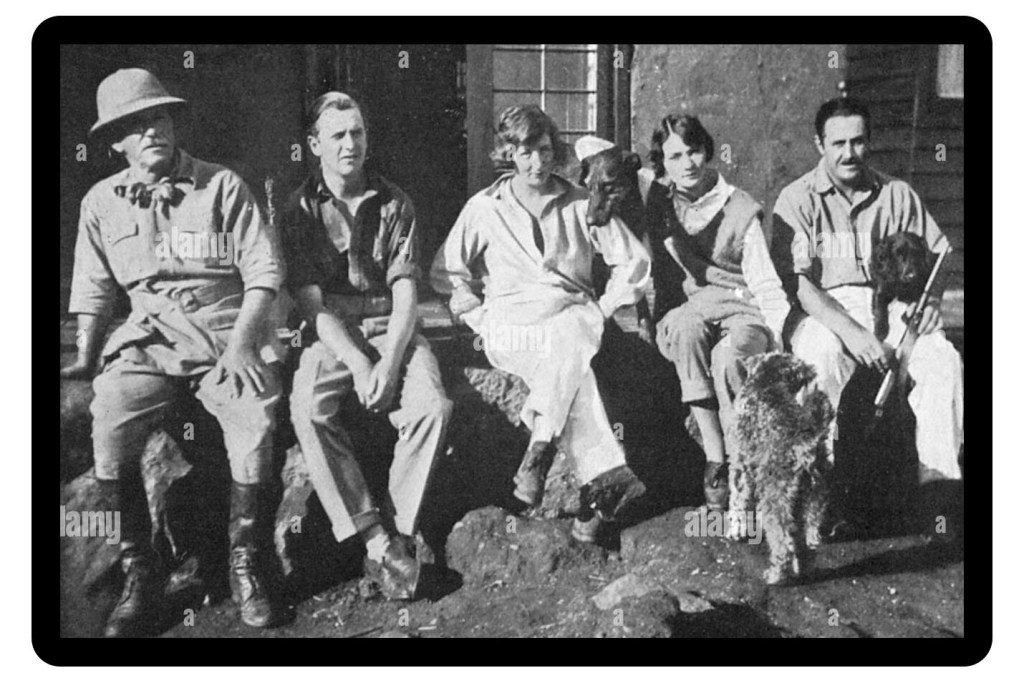
They would first find cache in colonial circles like the ‘Happy Valley Set’ of of Kenya, where British Army bush jackets came to be worn in a civilian context after many had become enamoured with them in the tropical theatres of WW1. We can see a classic pattern being worn here by a one ‘Trevor Sheen’ in this 1926 photo featuring Lady Idina Hay and Earl Errol:
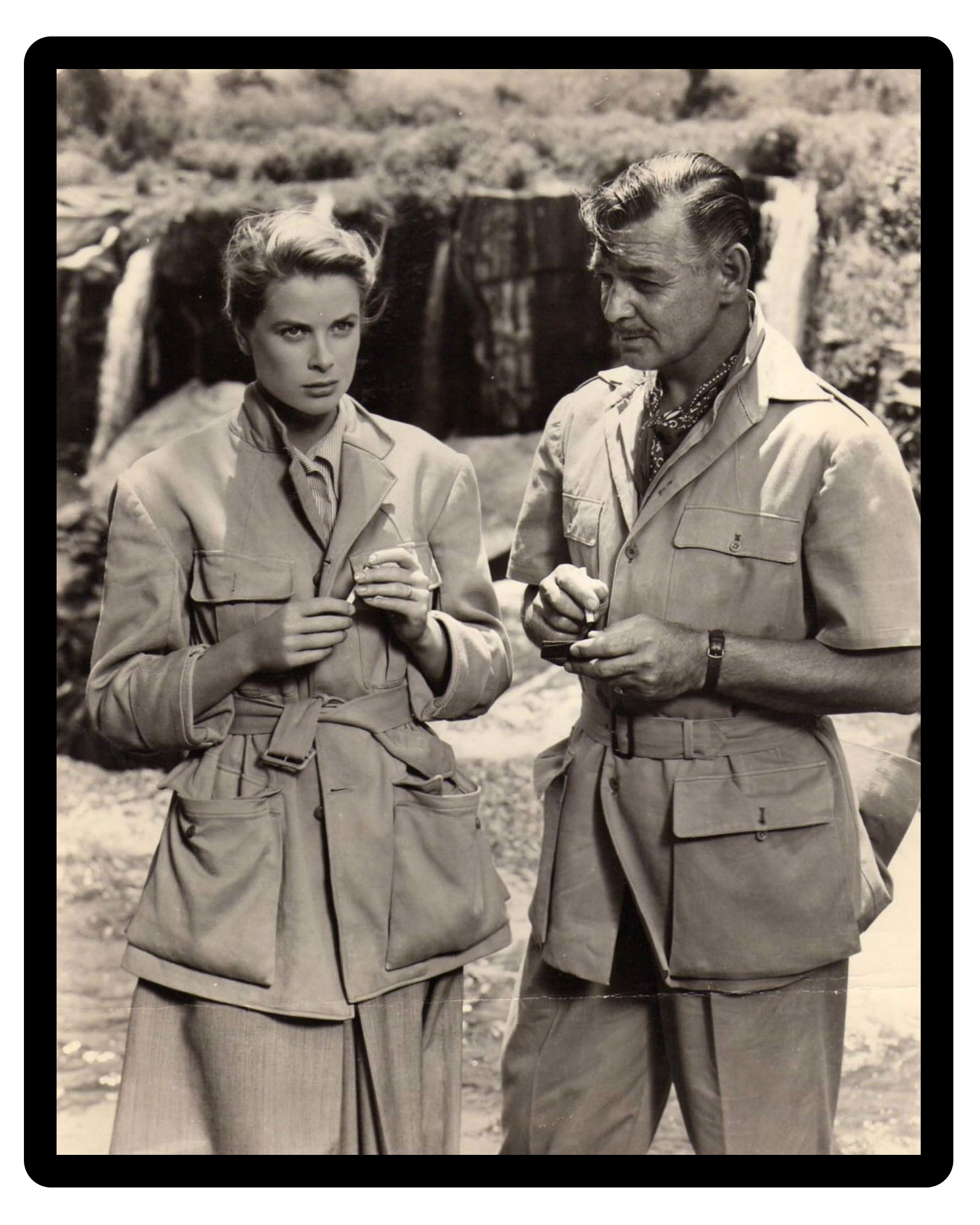
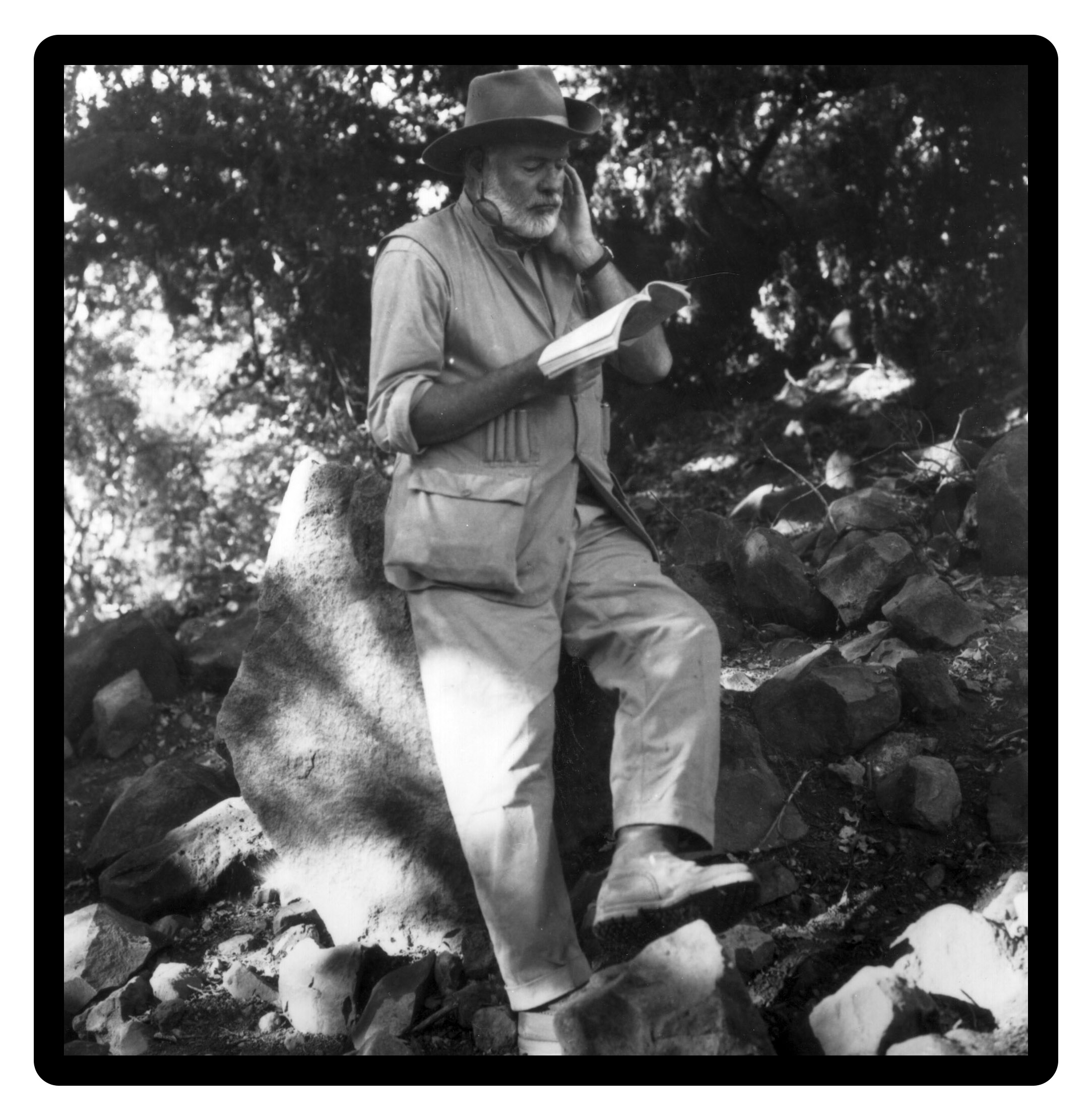
Then the jacket would go on to yet more glamorous heights with Clark Gable donning one in the 1952 Hollywood film ‘Mogambo’. Shots of Ernest Hemingway hunting in Africa also come to mind when one thinks of this decade:
It seems like the jacket very much stayed true to its military roots until the late 1960s, when Yves Saint Laurent introduced it in a runway context for ladies. This time with a longer, slimmer cut, and a more exaggerated point collar. Subsequently a precedent was set, as the garment became imbued with certain sense of louche glamour.
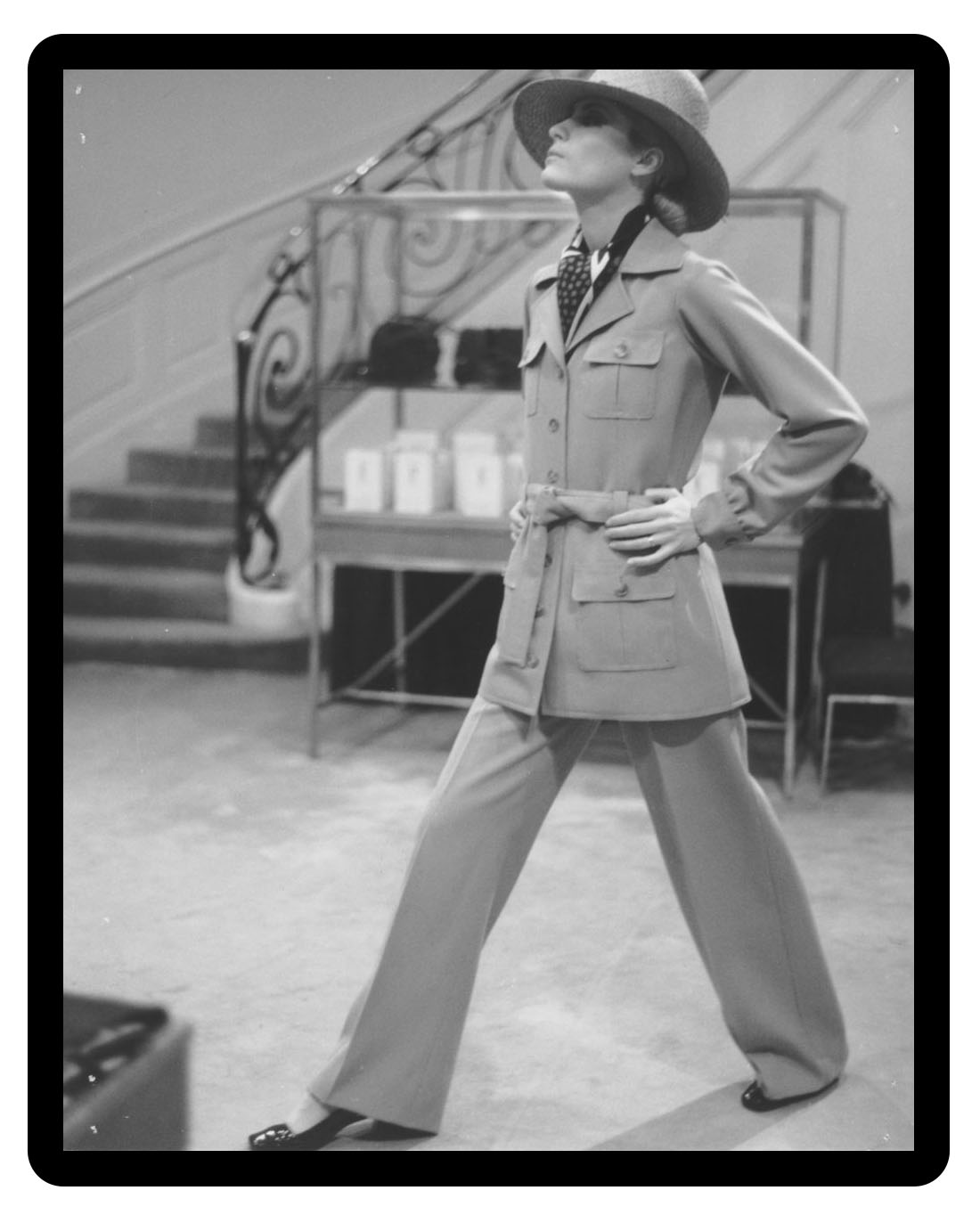
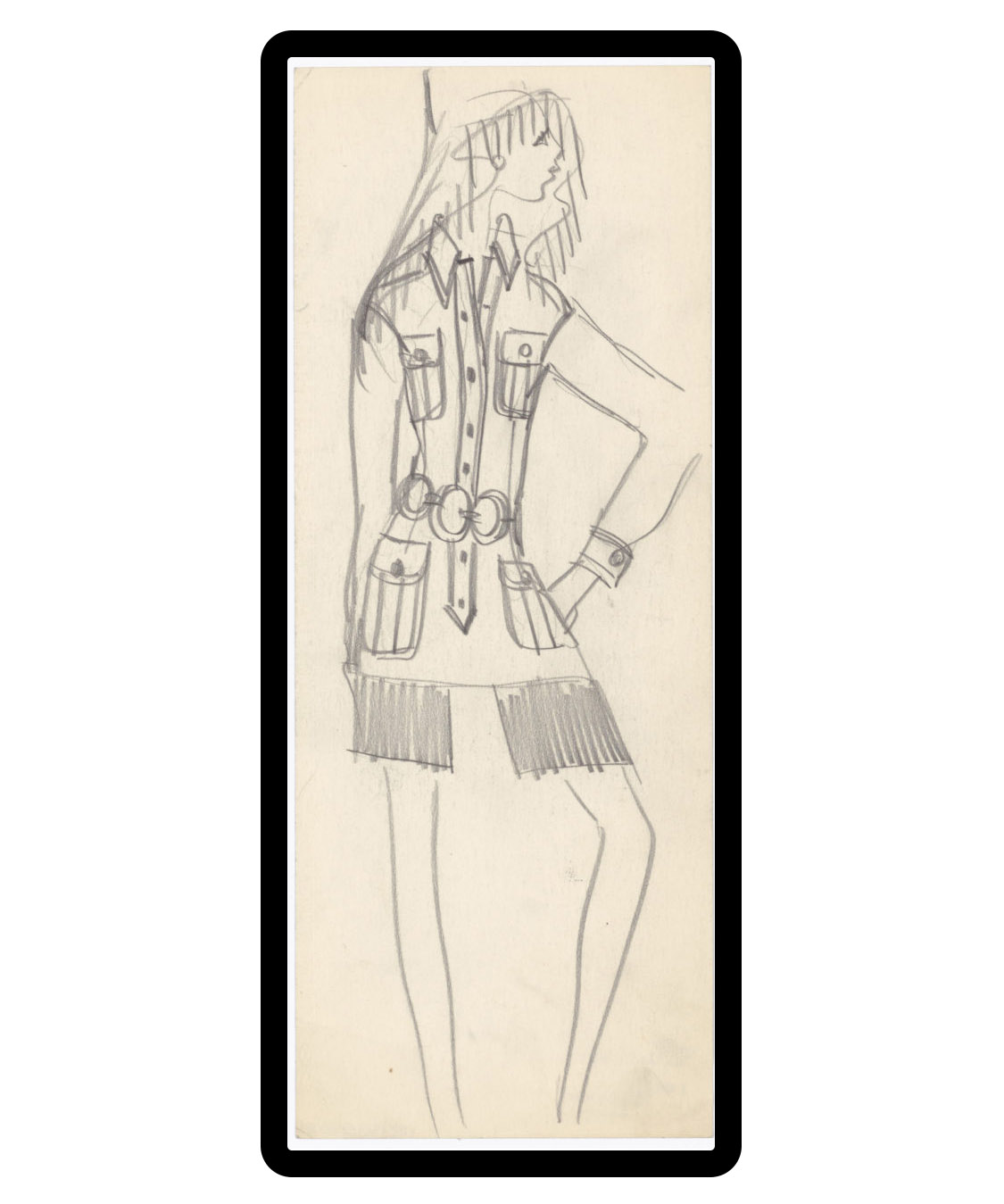
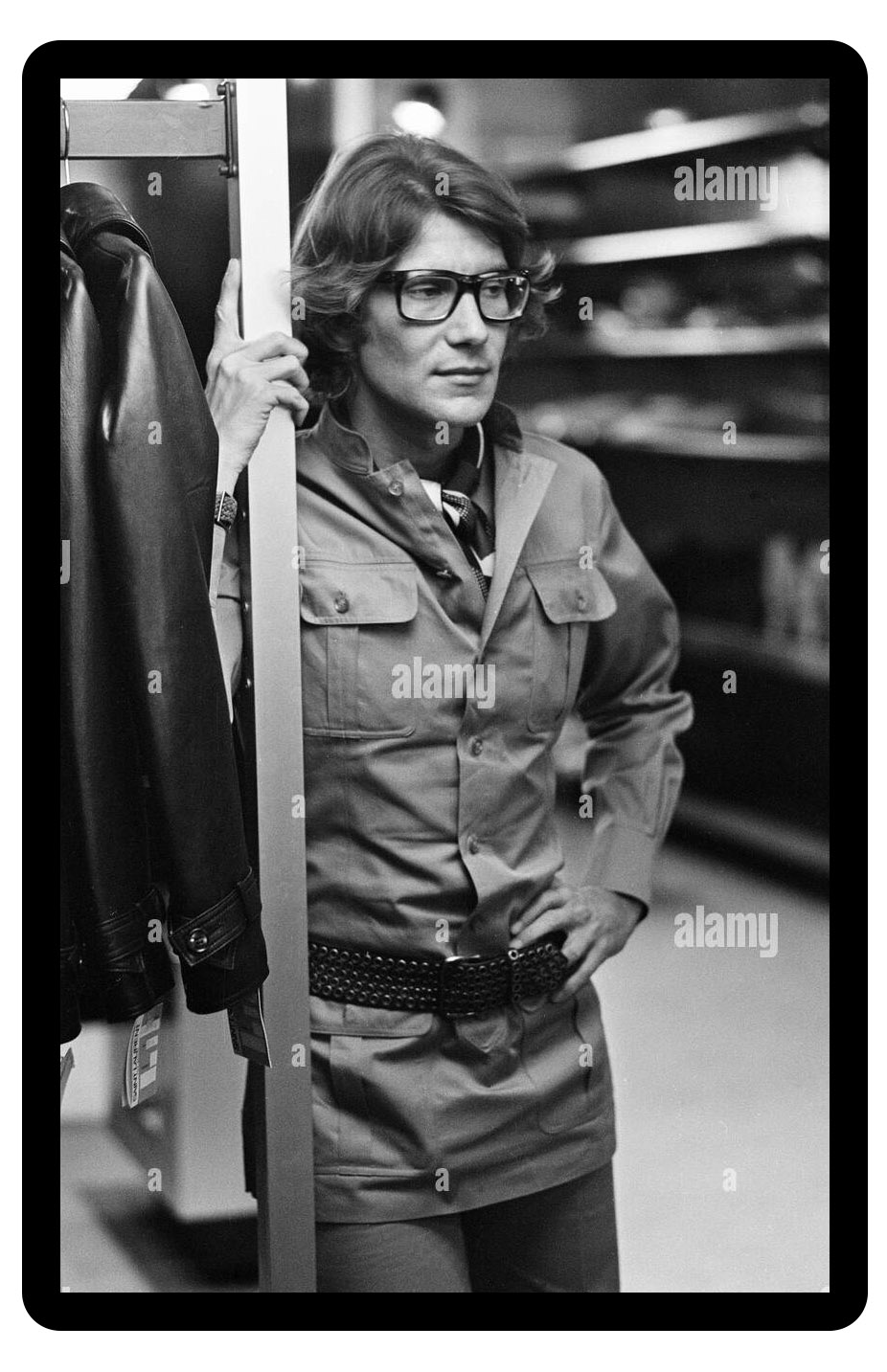
And, In the 1970s, the designs really began to change, with examples becoming more streamlined and re-interpreted in a ‘modernist’ style. Nowhere is this better displayed, than in the versions worn by Roger Moore in the Bond films of this decade:
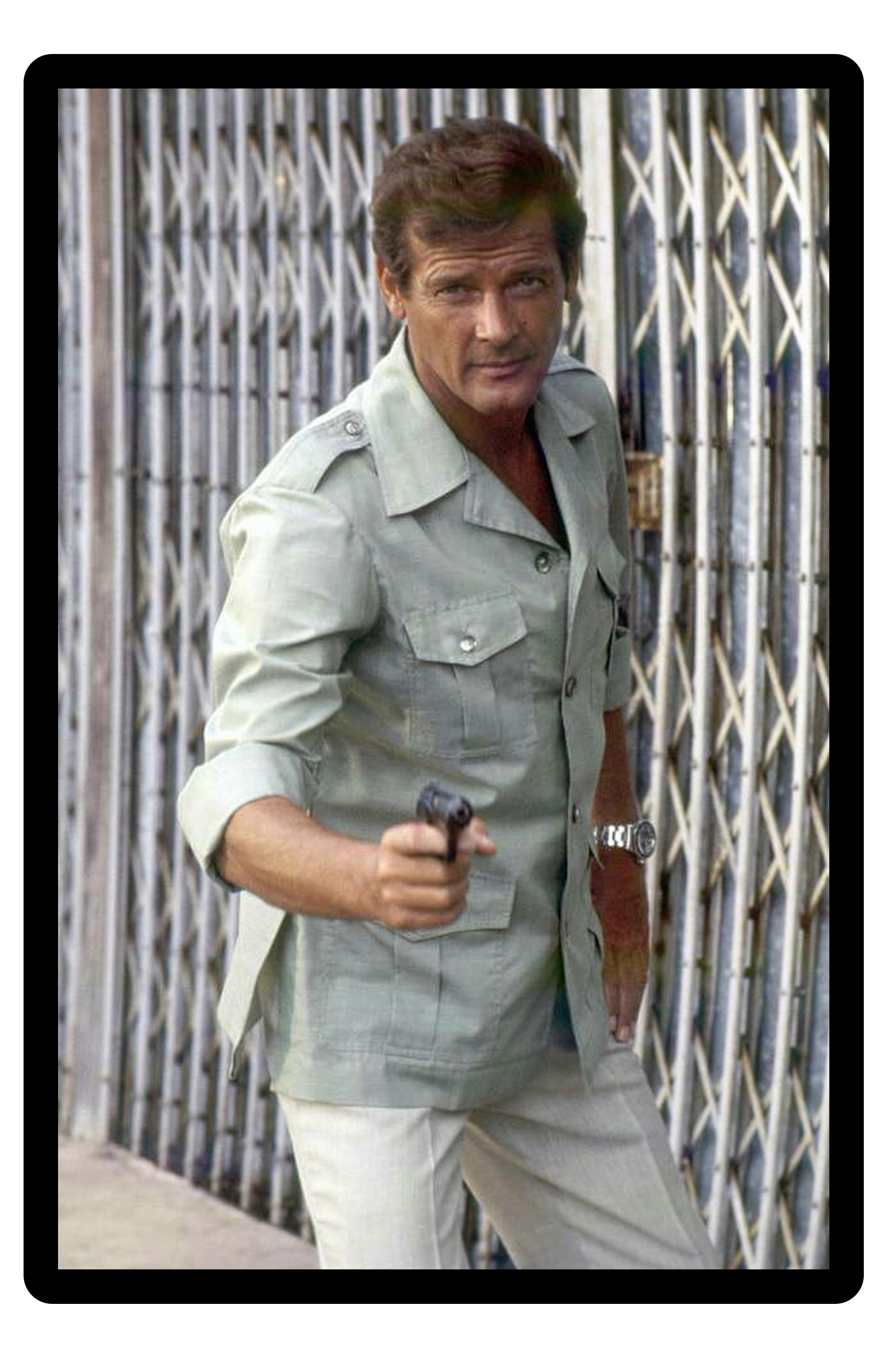
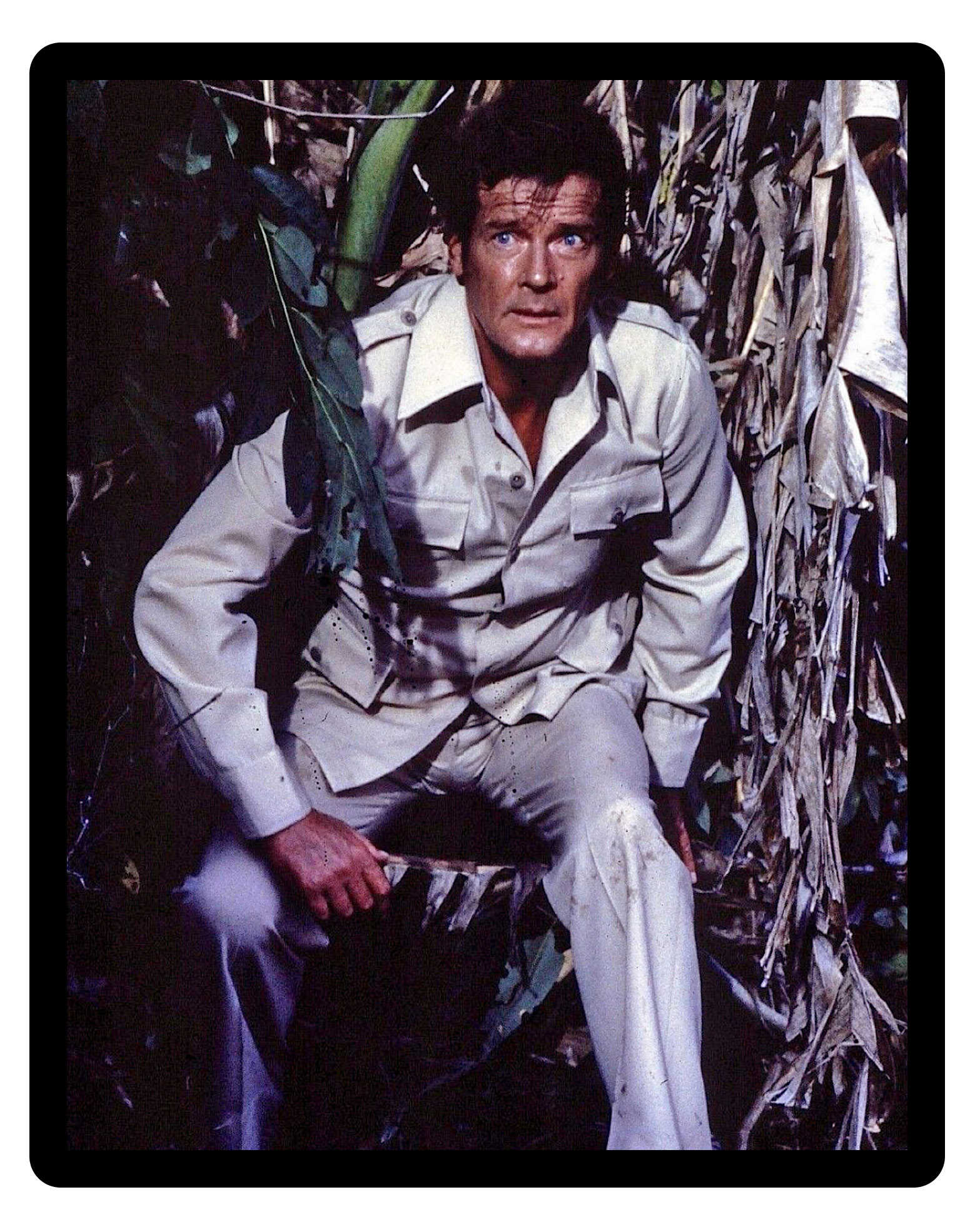
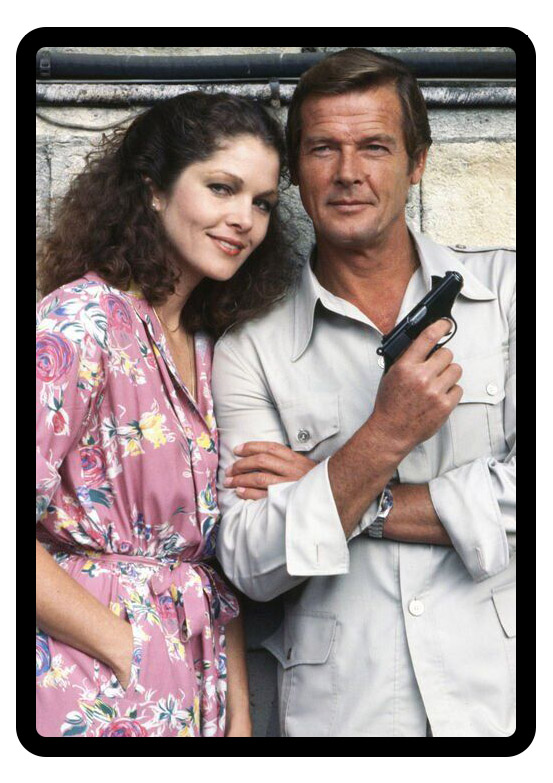
Unfortunately though, the 1970s was also the decade in which synthetic fabrics were reaching the height of their popularity, and many cheap and nasty ‘Safari Suits’ in Polyester were made to cash in on the trend. Hence forth, the reputation of the Safari jacket would be sullied, consequently being resigned to the ‘Stuffy’ pile. And although brands like Ralph Lauren would continue to see the romance in them (Polo recreations of an 80s or 90s vintage are some of the best actually), from this point on it seems as though the Safari Jacket ‘moment’ was over.
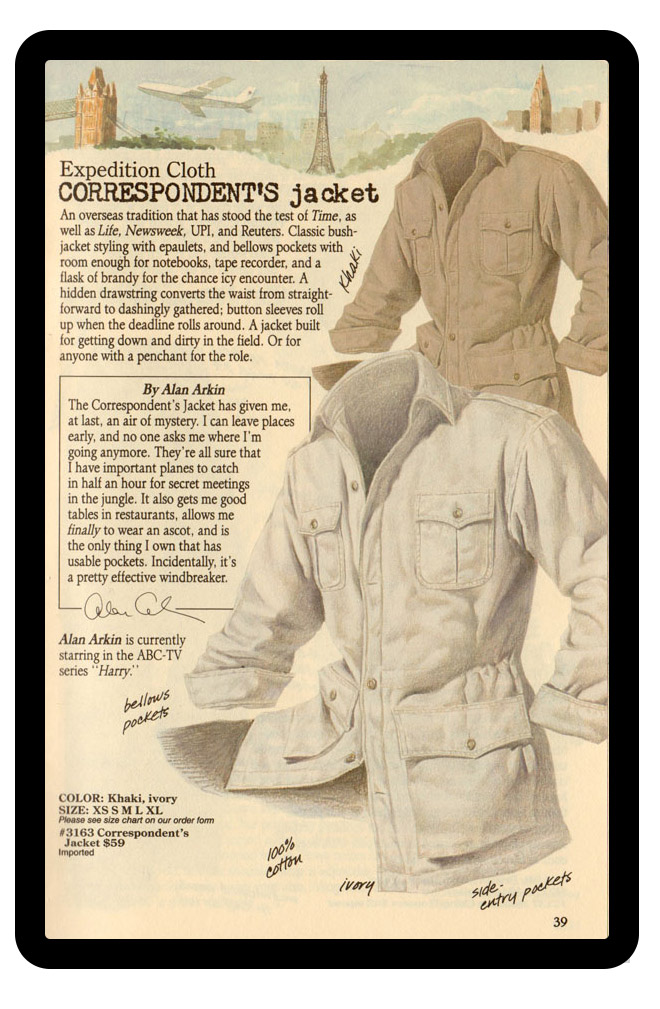
For the sartorial connoisseur however, I think the lustre of the garment never really went away. And there are many brands today that cater to the modern gent who finds himself in need of one. When setting out to purchase one however, it is important to realise that there are essentially two categories of Safari jacket, which I have dubbed the ‘Rugged’ and the ‘Elegant’. As you would expect, the rugged safari jacket is one that stays close to the Military inspired source material, and as such comes made up in hard wearing cotton twills, in neutral khaki or olive shades. These pair well with faded old jeans or chinos, casual shirts, and desert boots (perhaps a classic German Army Trainer would work also for a more sporty look). It’s an outfit you can imagine a journalist or photographer abroad wearing. Banana Republic in their 1980s golden era even named their version after this phenomena. They dubbed it ‘The Correspondent’:
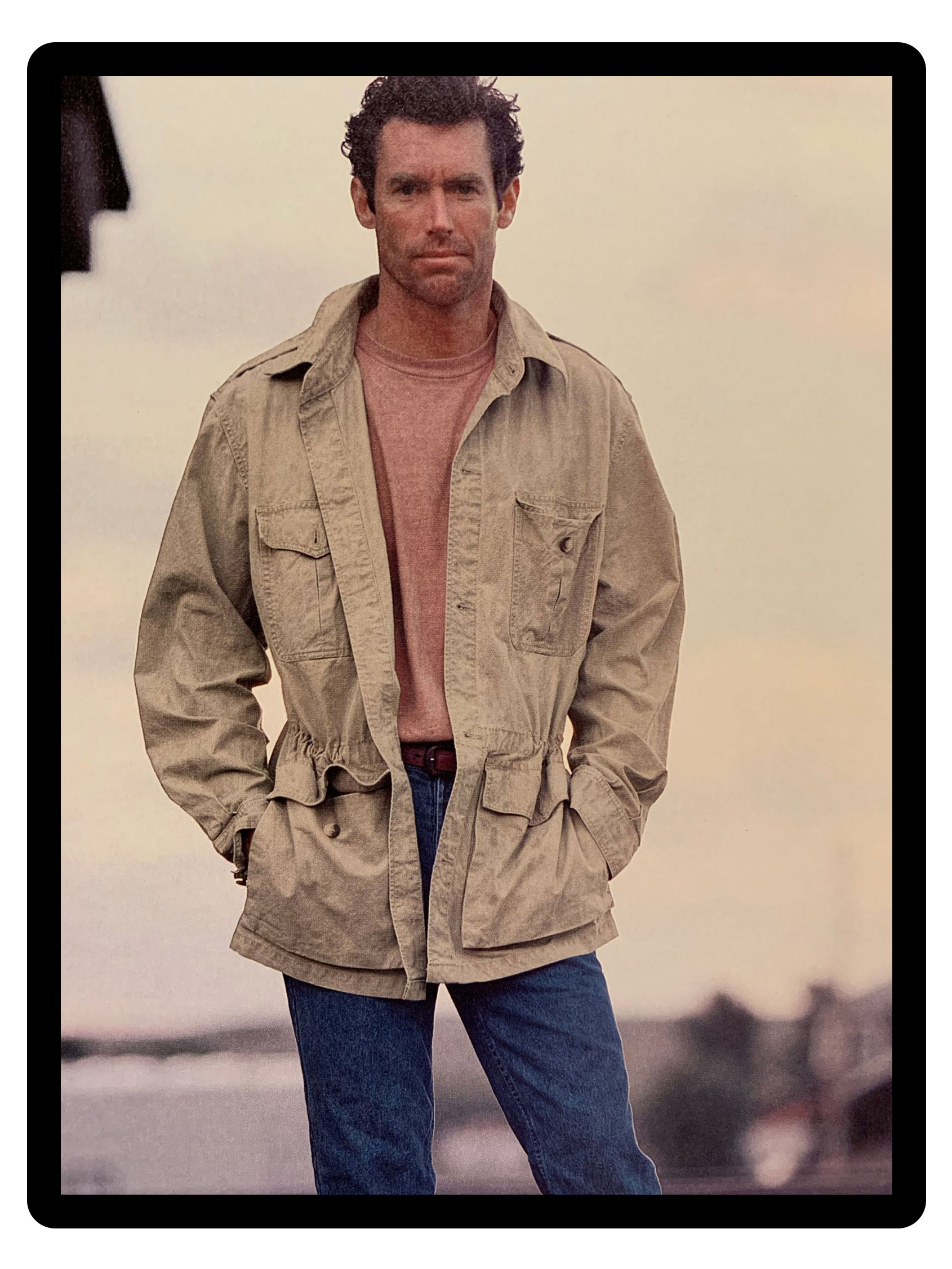
However, for those who wish to find a safari jacket that compliments their tailored trousers and fine gauge knitwear, I would recommend an ‘Elegant’ safari jacket. This variety is best exemplified by the Italian ‘Sahariana’ styles that Neapolitan tailors are known for. Stylistically they seem more inspired by 1970s patterns, and come with simpler pocket designs and sharp collars that sit a bit more flush on the shoulders. If a belt is present, it will be a very basic one that ties around the waist, as opposed to having a buckle system. I also find that some are cut a bit shorter, with the idea being that one wears them with a higher waisted trouser. The goal is to maintain the more practical elements of the original patterns, whilst upping the refinement in terms of fabric and finishing. The result is something that is very relaxed and cosy, yet highly presentable. In this regard, an Elegant safari jacket is almost akin to a dressing gown or smoking jacket (you really just feel at home in one!).
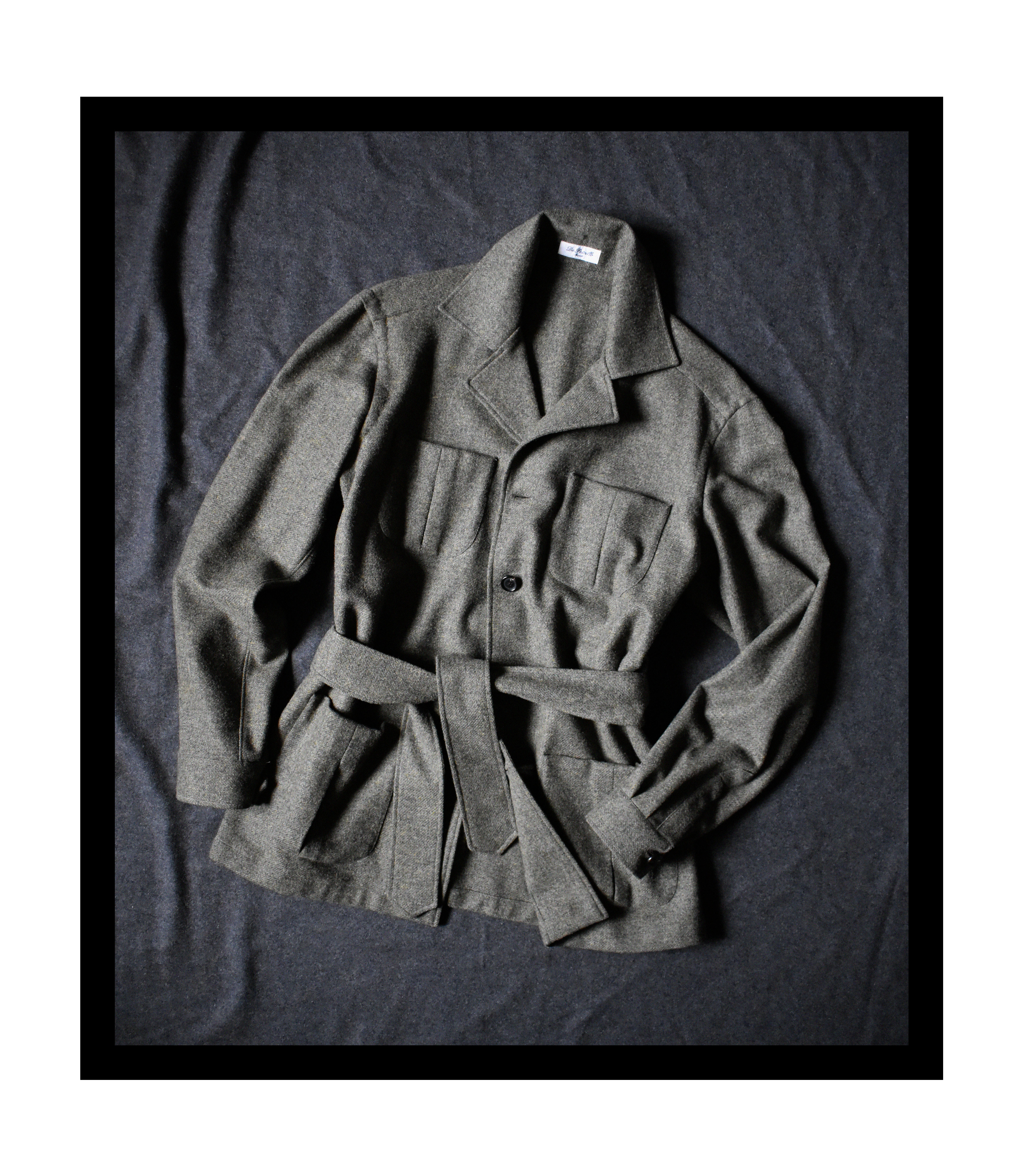
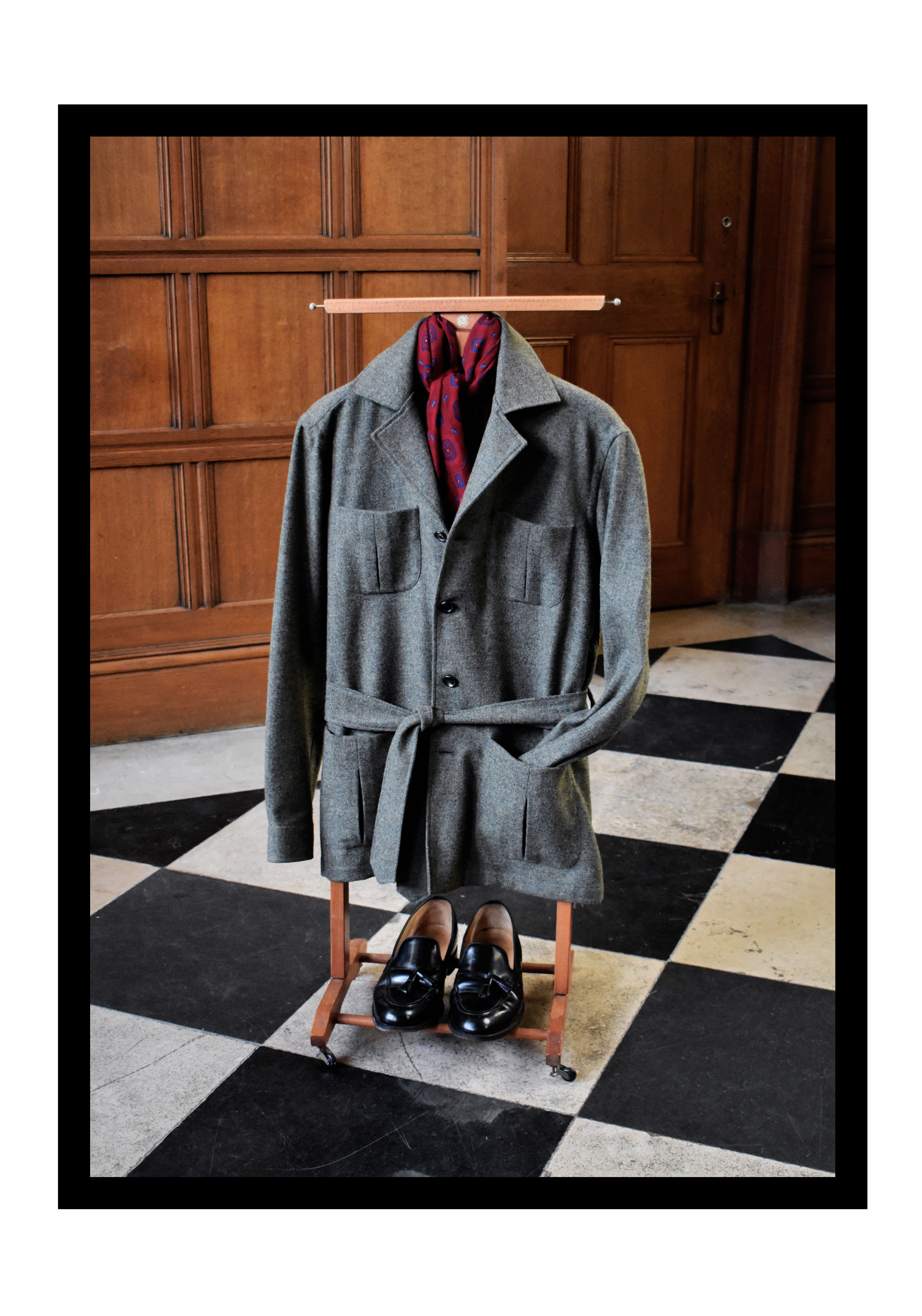
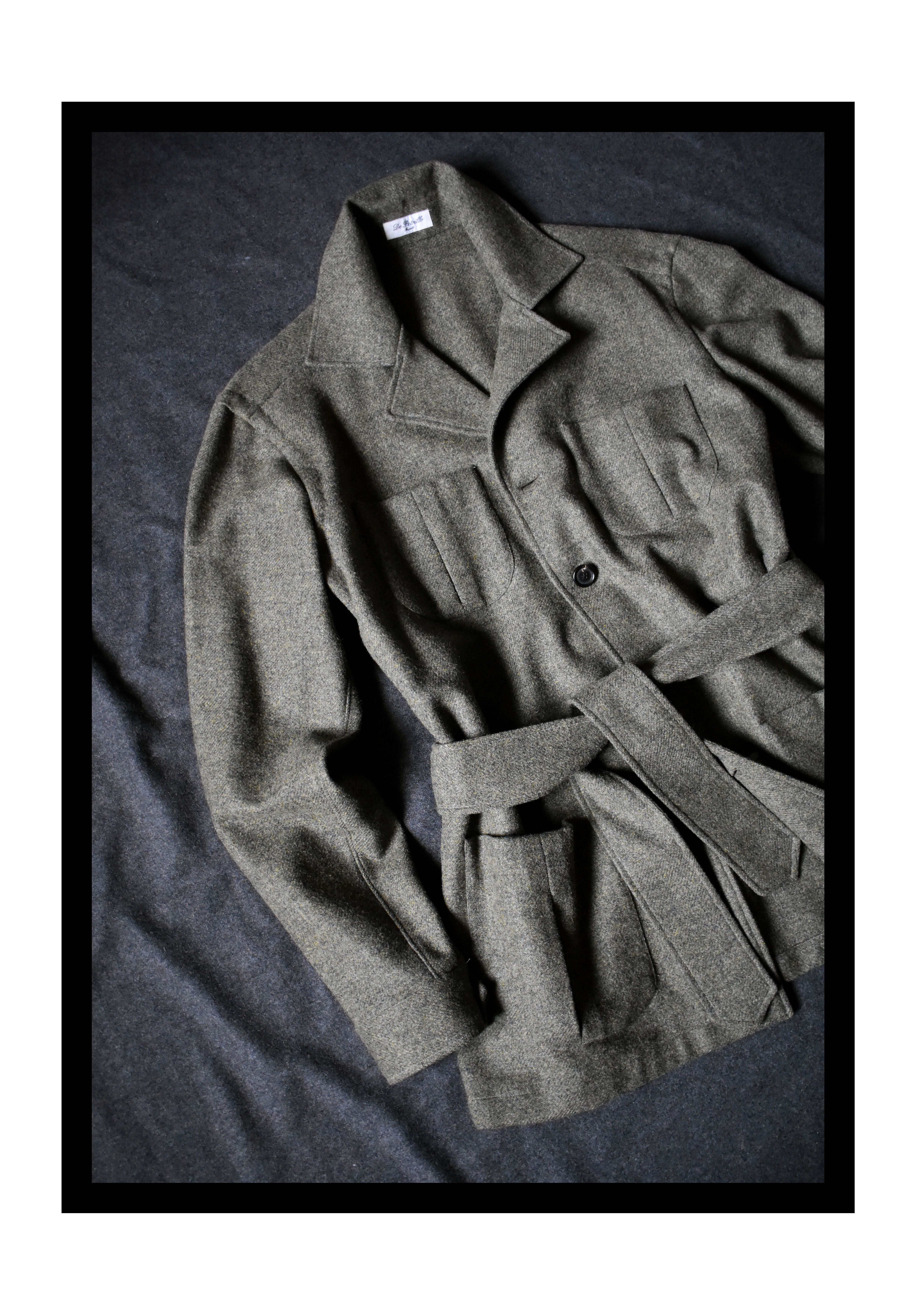
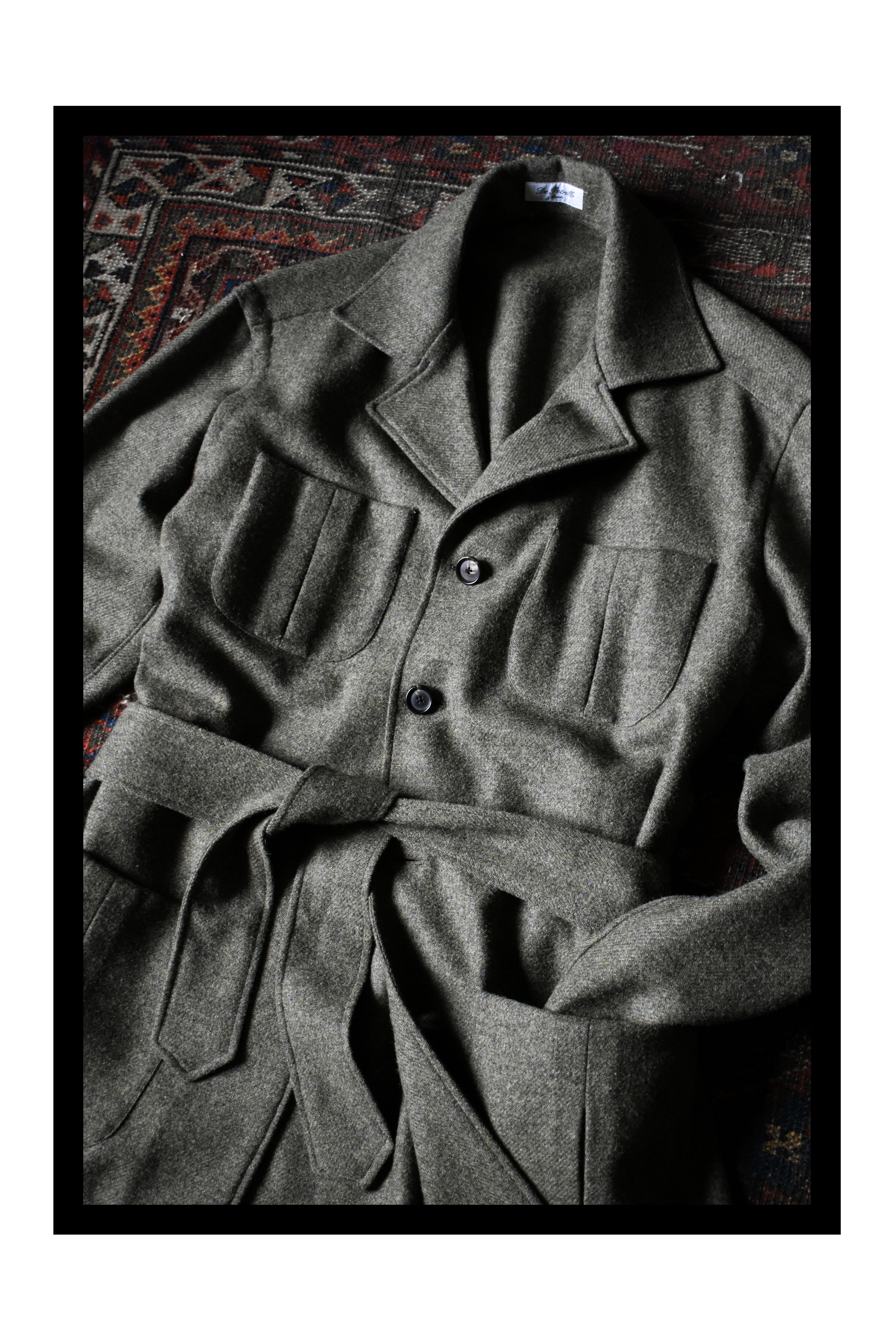
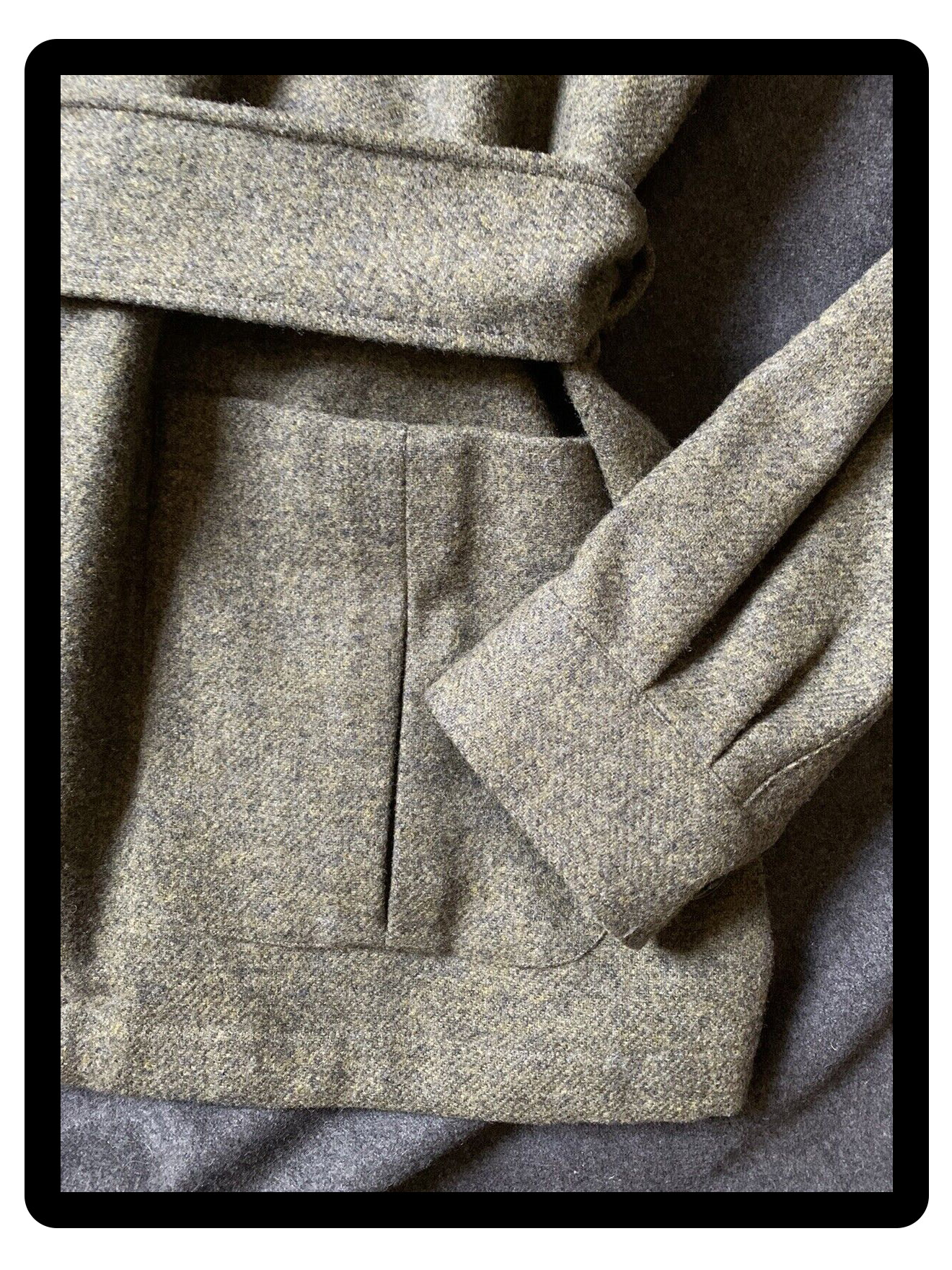
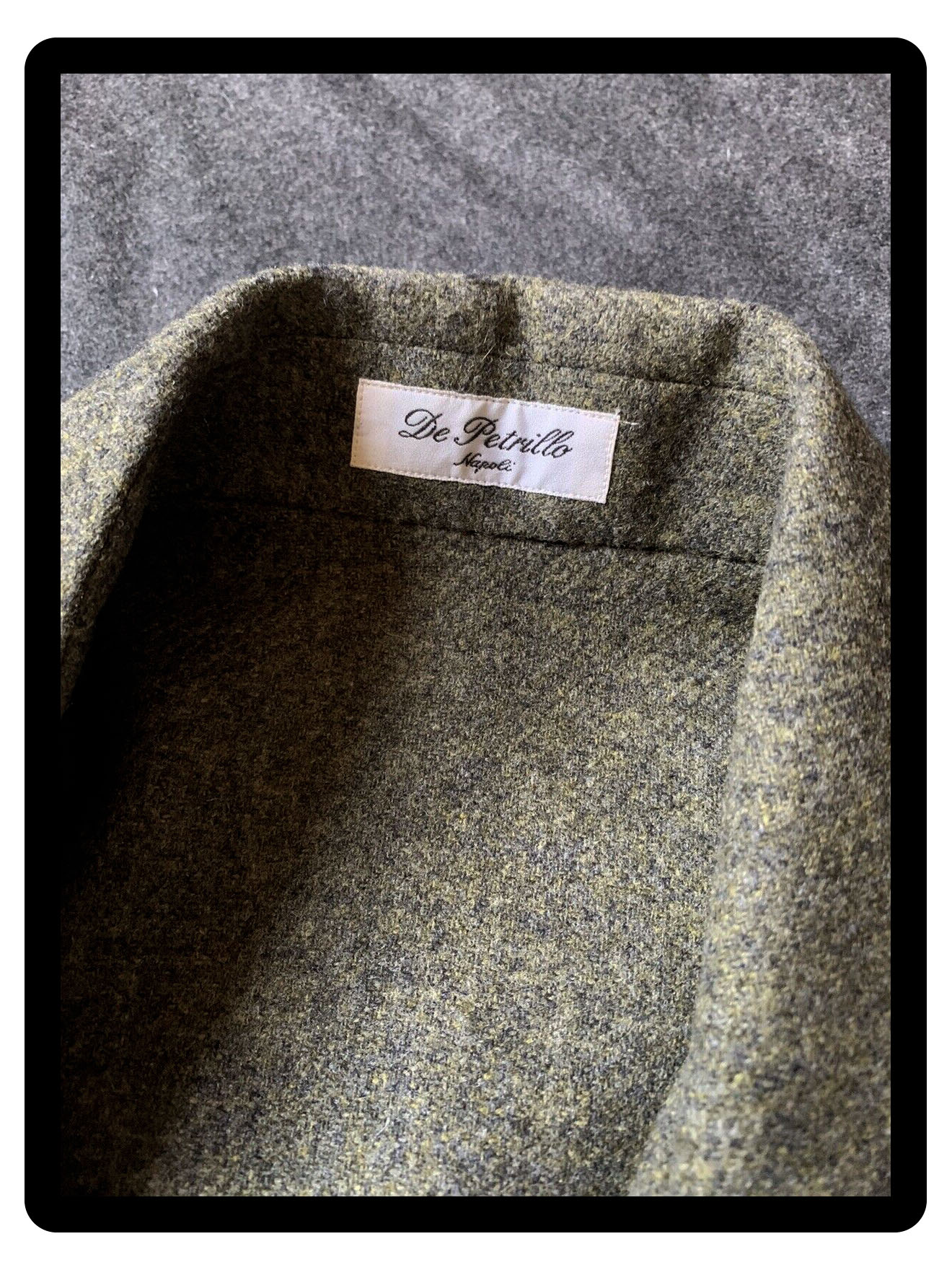
It is a philosophy of comfort and style that certainly comes across in this gorgeous piece I am spotlighting here today. Crafted by the magnificent De Petrillo, this one features four open front pockets, each with pleat detail and cotton lining for added comfort. A generous collar is present, and a belt which allows the wearer to cinch in the waist for a classic silhouette. The cloth it comes made up in is also rather exquisite. A Grey Woollen twill that has these very characterful mossy Green inflections, almost tweed like. This is a great example of what the Italians do best: luxury takes on quintessentially British patterns. Surely worthy of the title ‘Elegant’…
Available to purchase in the Sartorium here
 The Sartorium Companion Journal